
#112: Optionality: How to Thrive in a World You Can't Predict
Inspired by Taleb. Made urgent by AI.

👋 Hey, Leo here! Welcome to The Antifragile Leader. Each week, I explain the concepts needed to lead through uncertainty. Subscribe to get every issue in your inbox.
Hey Friends,
Welcome to the 112th edition of The Antifragile Leader.
I’m playing around a bit with the days I will send the newsletter, so bear with me for a few weeks once I figure out which one’s best.
Last week I had the last course of my MBA. What a journey!
And how time flies.
But a story about this whole experience is coming up in the next few weeks.
Until then, I want to talk a bit about a core concept of antifragility: optionality.
People have been asking me lately:
What does it mean to build a career that benefits from uncertainty?
Not one that survives it. One that gains from it.
That adapts. That compounds.
This is the heart of Nassim Nicholas Taleb’s concept of optionality, a recurring theme in Antifragile. And, I believe, one of the most powerful (and often misunderstood) principles for navigating modern work and life.
Taleb argues that in complex systems, intelligence matters less than positioning. That “via negativa” (removing fragility) beats optimization.
Having options, such as paths to explore, pivots to make, and doors to open, is more significant than possessing an ideal plan.
And right now, with AI reshaping the landscape beneath our feet, optionality is no longer a theoretical advantage. It’s an existential one.
What Is Optionality?
Taleb describes optionality as
“The property of asymmetric upside—more potential gain than potential harm.”
It is a strategic exposure to positive randomness.
Like a financial call option, it gives you the freedom to act, but not the obligation.
If something unexpected goes your way, you benefit. If it doesn’t, your losses are minimal.
Optionality is how venture capital works. It’s also how careers should work.
But let’s see how old this principle is. It’s ancient, even.
Thales and the Olive Presses
In Antifragile, Taleb recounts the story of Thales of Miletus, a philosopher who was ridiculed for being wise but poor.
To prove that intelligence could, if desired, be turned into wealth, Thales placed small deposits to secure the rights to use local olive presses months before the harvest, when no one else was paying attention.
When an unexpectedly bountiful olive season arrived, demand for presses surged. Thales exercised his options and rented them out at a premium, earning a fortune.
“He did not predict the success of the harvest. He just made sure he had the option to benefit from it.” — Antifragile
Thales didn’t own the presses. He owned the right to act.
He didn’t gamble. He designed an asymmetric bet: small downside, massive upside.
Optionality in its purest form.

Why the Old Career Playbook Is Now Fragile
Traditional career thinking—pick a path, specialize early, stick to it—was optimized for a slower world.
A world with more predictability, less volatility.
But today’s reality is different:
Roles evolve faster than people’s job titles do.
Companies are disrupted from the outside, not from the inside.
AI is commoditizing knowledge work at an accelerating pace.
In Taleb’s language, the modern career path is increasingly fragile: it relies on things going according to plan.
Optionality, by contrast, prepares you for what doesn’t go to plan.
It’s the difference between being path dependent (locked into one direction) and option-rich (able to pivot, to explore, and to evolve).
Optionality in the Age of AI
I am talking more often about AI because I see it as the steam engine, the computer, and the Internet of our generation. Probably more disruptive and faster than all of them.
AI makes optionality even more essential. It changes the landscape in four key ways:
It devalues execution-only roles
Tasks that were previously secure are now automated or outsourced.It increases the value of creativity and adaptability
Those who combine tools, context, and human insight are harder to replace.It makes iteration cheaper
You can now build, test, and publish faster, with less capital (close to nothing).It amplifies leverage
A single good idea, executed with AI-enhanced tools, can scale like never before.
This means
A product manager who can prototype with AI gains leverage.
A generalist who combines domain knowledge with storytelling and strategic sense becomes hard to replace.
A leader who can test ideas quickly, without overcommitting, can make 100 small bets instead of one large one.
AI is not the threat. Fragility is.
In this context, optionality looks like
Small projects with potential upside (newsletters, tools, prototypes)
Cross-disciplinary skills that compound (tech + biz + comms + AI fluency)
Slack in your schedule, your energy, and your finances
A network that opens doors you didn’t know existed
You don’t need to predict how AI will evolve.
You need to build a life that can benefit you no matter how it evolves.
How to Build Optionality Into Your Career (and Life)
Here are a few practical ways to think about it:
1. Barbell Your Commitments
Taleb's "barbell strategy" means combining two extremes: ultra-conservative on one side and ultra-aggressive on the other.
Example: Maintain a stable job, but use your spare energy to build optionality: writing, speaking, building, learning.
2. Invest in Skills That Scale
The most antifragile skills are the ones that get more valuable over time and across contexts:
Critical thinking
Systems design
Influence and storytelling
Strategic technology fluency (e.g., AI prompting, low-code automation)
3. Design for Reversibility
Avoid commitments that are hard to walk away from.
Fragility often hides in golden handcuffs.
Ask, “If this no longer serves me, can I exit easily?”
Practically, this means
Taking a short-term contract over a full-time role when you're exploring a new industry.
Renting instead of buying in a city you’re unsure about relocating to.
Building with low-code tools instead of fully custom tech stacks early in a startup.
Negotiating a role with a trial period or exit clause, especially in startups or ambiguous organizations
4. Remove Fragility Before Adding Complexity
Before optimizing, subtract.
Eliminate dependencies. Clarify what you actually want.
Optionality grows best in simple, clean systems.
✅ Examples:
Saying no to meetings or projects that no longer serve your goals
Closing social media accounts that create distraction but little opportunity
Letting go of the identity you think you should have (e.g. “I’m a pure coder”) so you can pivot
5. Expose Yourself to Serendipity
Write publicly. Share ideas. Teach something.
Most of my best opportunities didn’t come from plans but from being visible in the right conversations.
Posting a short insight on LinkedIn once a week; your next opportunity may be reading silently.
Mentoring someone and getting invited into something bigger through that relationship.
Speaking at a small local event, where one person in the audience might later become a partner, client, or investor.
A Quiet Revolution
Optionality is not loud. It doesn’t always come with status or instant ROI.
It looks like
Saying yes to a collaboration that “might go somewhere”
Taking a course in something outside your domain
Publishing a post no one asked for
Learning a tool you don’t yet have a use for
It’s not the fastest path to success.
But it’s the one that keeps you in the game and, eventually, tilts the game in your favor.
A Closing Thought
“If you see fraud and do not say fraud, you are a fraud.”
Taleb’s most quoted line. But here’s another:
“You want to be someone who gets stronger as the world gets weirder.”
That’s what optionality allows.
You don’t need to predict the future.
You just need to build a life that gains from it.
Recommendations:
If you’re interested in a TLDR on the latest AI paper by Apple that took the Internet by storm, here it is:
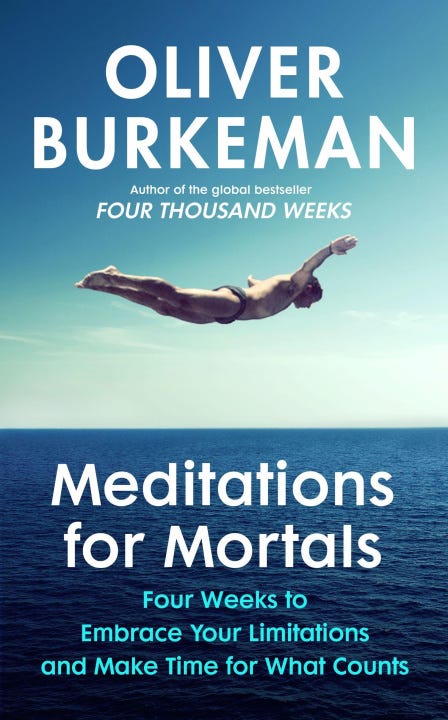
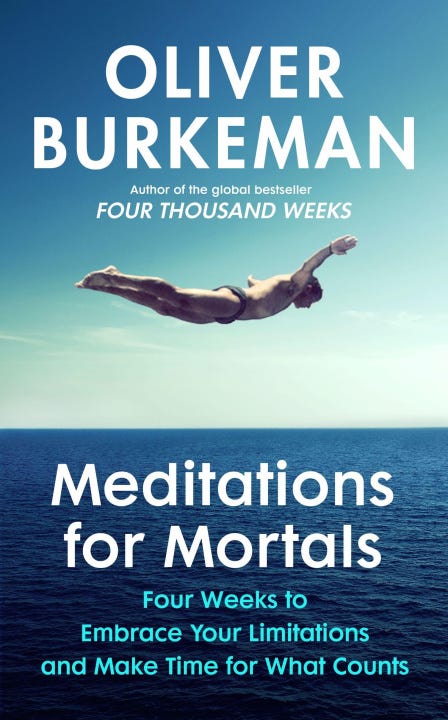
I finished listening to this audiobook by Oliver Burkeman, the author of “4000 weeks,” and it was a refreshing read. We need to remind ourselves ever so often that it’s not all about productivity.
This (long) conversation between Lex Fridman and Sundar Pinchai, CEO of Google and Alphabet about all things Google, Leadership, and how AI will impact our future.

Thank you for reading.
If this resonated, forward it to someone navigating change or wondering how to stay relevant in an age of AI.
And if you’re building your own barbell, I’d love to hear how.
Stay antifragile,
Leo
P.S. If you enjoyed this piece and want to support my writing, please consider sharing it and becoming a paid subscriber.
Thank you so much for being here!
P.P.S. If you want to read my content daily, don’t forget to follow me on LinkedIn